
Charlton County Arrest Log Status
Neither the Charlton County Sheriff's Office nor Folkston Police publishes an online arrest ledger. The city of Homeland posts no booking feed. A web search may still surface local stories or copied booking entries. Treat those as publications. They are not the sheriff's complete register.
A solid multi-day search starts with a defined range, say Monday through Sunday. It asks for records that already exist. Daily incarceration lists show who was in custody on a given date. Jail registers and individual booking files serve broader record functions. Call none of them a public online blotter, because the custodian has not posted one.
Read Charlton Arrest Records by Date
Start with the official records and build the date range from there. The sheriff's Open Records form accepts a subject, incident details, and dates. Request an existing daily incarceration list or a jail register extract. You can also ask for a named booking record. Asking only for "the arrest log" can confuse the agency. The office uses no such label. No public web product carries that name.
- Write the first and last calendar dates needed.
- Submit the Sheriff Open Records Request and name the existing record sought.
- Ask whether arrest time, booking time, agency, charge, bond, release, and transfer fields are maintained.
- Sort results by the event date, not the date a news page appeared.
- Use the proper court clerk for a later disposition.
Chasing one fresh event instead of a range? Use the 24 Hour Arrests process and call the jail directly.
Charlton Arrest Log Field Check
This inventory shows which fields to compare across an official response and later coverage. It does not claim each field appears online. Blank data may mean it was never collected, never released, or dropped by the secondary source.
| Field | How to read it |
|---|---|
| Name and booking number | Use both to reduce mistaken matches. |
| Arrest and booking date | These may differ and control the requested span. |
| Arresting agency | Identifies the office holding the incident report. |
| Charge or process | An initial charge, not a conviction. |
| Bond, hold, release | Explains custody changes but not the final result. |
| Case number | Connects a booking to court follow-through when assigned. |
| Source timestamp | Shows how current the copy was when reviewed. |
Georgia jail records may also list age, sex, race, commitment date, discharge date, and the court or process involved. Protected fields can be withheld. Ask the custodian to state the basis for any withheld portion.
Charlton Arrest News Versus Logs
The Charlton County Herald publishes selected local police and crime stories each week. It is a news source, not a jail ledger. A reported arrest can add context a terse booking row lacks. Editorial silence proves nothing either way.
The Georgia Gazette Charlton section runs a deeper, page-numbered booking and news archive. That outlet is an independent publisher with subscription prompts. It is not law enforcement. Check its dates, charge wording, and any claimed outcome against sheriff or court records. Neither site is the official Charlton County blotter. Do not relabel either one that way.
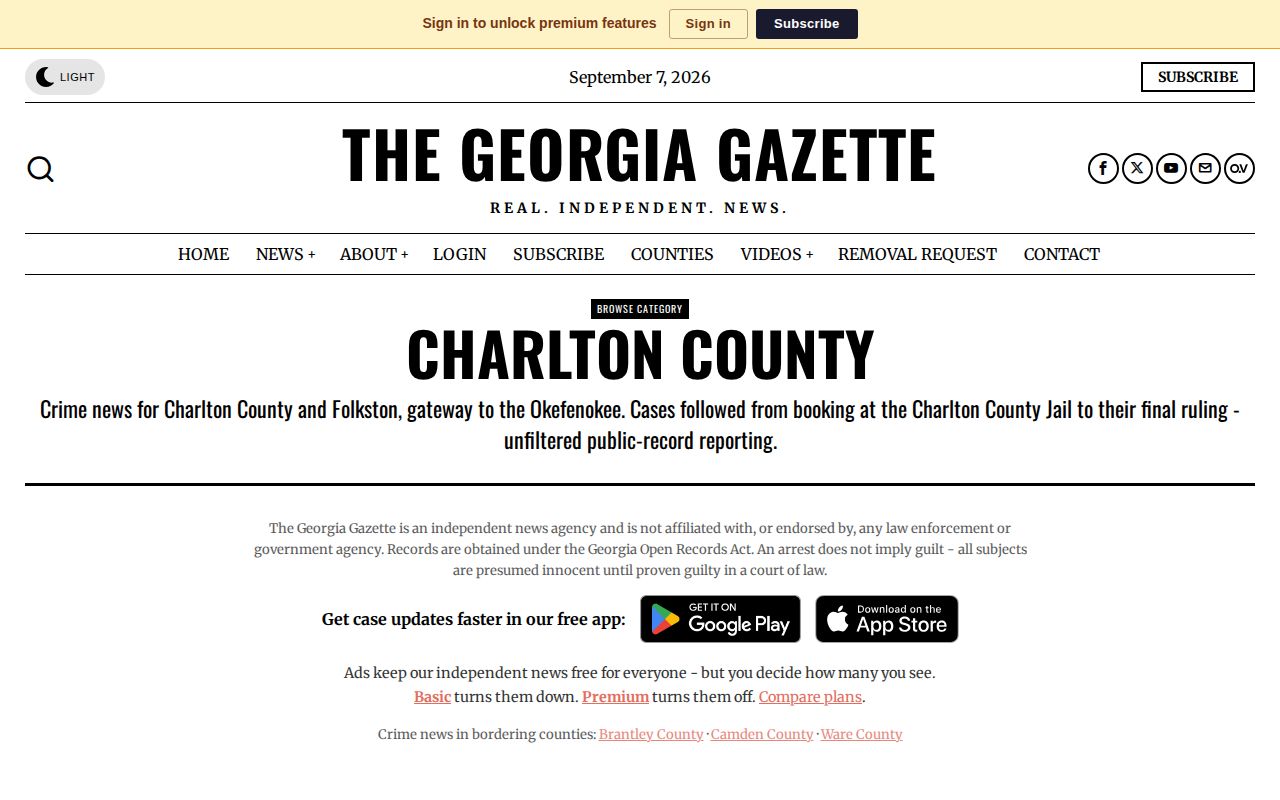
The page depth and publisher framing make the Gazette useful as a lead only. Verify each item with an official custodian.
Charlton Arrest Archives and Retention
Georgia's local-government schedule sorts these records into three groups. Daily incarceration lists are kept for one year. Jail booking records and jail registers are both retained for ten years. That period runs from release or the last entry. That is why a web page can vanish while the underlying record stays requestable.
Request the record by formal type and date. A recent seven-day ask should fall within the daily-list period, though the schedule does not promise every field is public or that the format suits you. If the daily list is gone, name the booking or register entry instead. Older searches go better with a narrow range, subject name, arresting agency, and any incident or case number. The Georgia Archives local schedules hold the source rules.
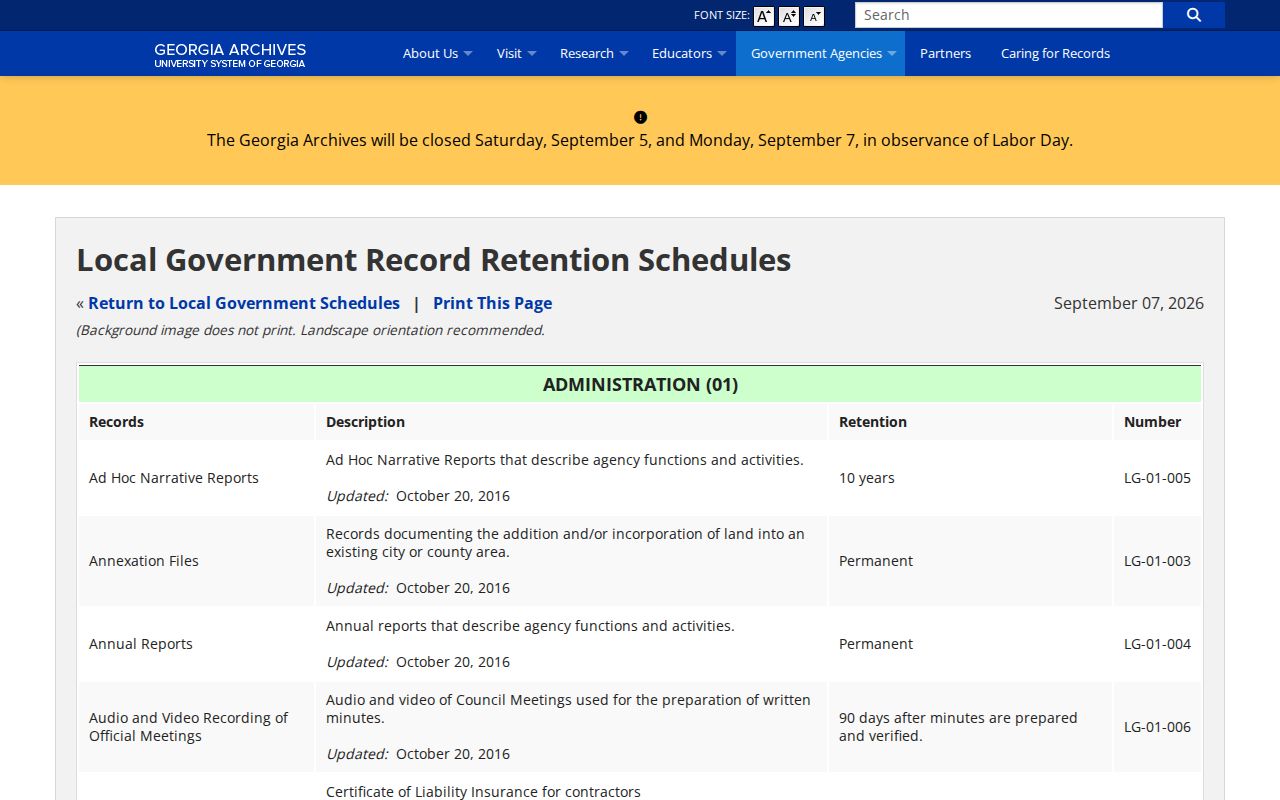
The capture shows why “arrest log” is too broad for a precise archive request.
Charlton Arrest Dates Need Context
A publication date is not an arrest date. Newsrooms group reports, booking archives refresh in batches, and court filings land later. Compare arrest, booking, commitment, release, and article dates separately. Weekends and holidays make this matter more, since office schedules can trigger a burst of late posts without any real rise in arrests.
A booking photo may be missing because of Georgia publication limits. A third-party image never shows current custody. Confirm status with the jail.
Charlton Arrest Entries Are Accusations
An arrest-log entry marks an early stage of a case. Charges, bond, and release all come later. The final result lives in the court file.
Choose the Right Charlton Arrest Record
A daily incarceration list answers one narrow question about confinement on a single date. A jail register formally records commitments and discharges. An individual booking record can hold more detail about one intake. An incident report stays with the arresting agency. It may describe the event. A court file tracks what happened once prosecutors filed. Picking the right record saves the custodian from guessing what "all blotter information" means.
- Booking
- The jail intake process and record created after arrest.
- Commitment
- The act or order placing a person in jail custody.
- Bond
- A release condition, not a judgment of guilt.
- Disposition
- The later court result of a filed charge.
Need a booking detail, an incident report, and a court outcome? That is three offices in Charlton County: the sheriff for jail and booking records, the police department that made the arrest, and the clerk for whatever the court later filed. No single record tells the whole story.
Review a Charlton Arrest Response
Once the records land, hold on to the custodian's note. It often explains redactions, gaps, or the format. Check it against the dates you asked for. Was a day left out? Ask why. No responsive arrest list and a withheld date are two very different answers, and you deserve to know which one you got. Then check the page order and figure out where each field came from, because a police narrative, a jail roster, and a court docket can all describe the same booking with conflicting numbers and dates. Keep those differences intact rather than folding them into a homemade blotter. One more caution applies. If the person was released during your date range, a current-custody lookup will miss that booking entirely. The dated jail record is the stronger route.